Nova Scotia’s Coastal Trails for Travelers Seeking the Atlantic Without Mass Tourism
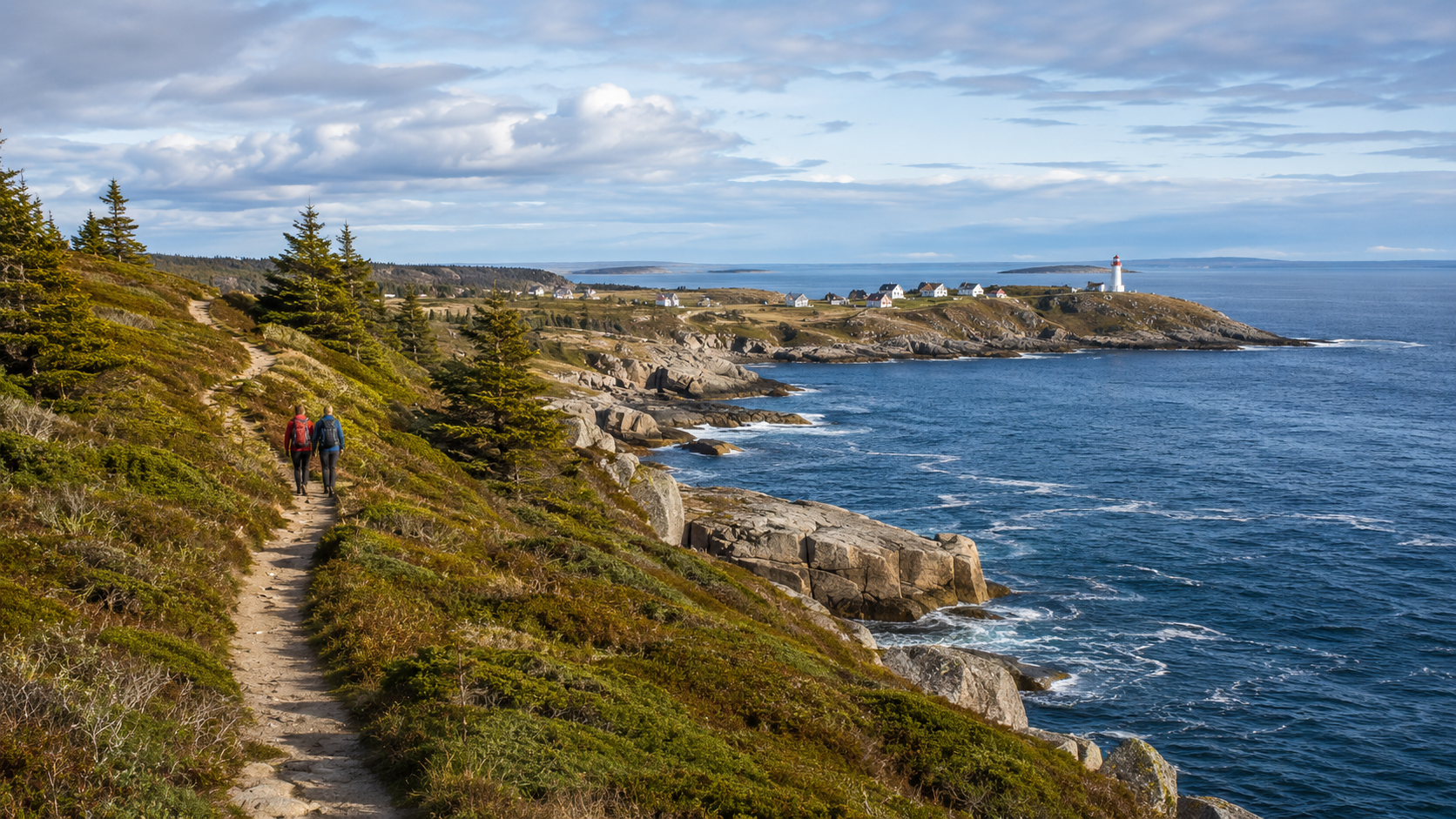
Nova Scotia is often described through familiar images: fishing villages, lighthouses, ocean fog, Celtic music, lobster, and the famous Cabot Trail. These images are accurate, but they do not fully explain why the province is so rewarding for active travelers. The real strength of Nova Scotia is not only in its postcard landscapes, but in the way the Atlantic remains close without always feeling crowded. For travelers who want coastal walking, ocean views, wind-shaped terrain, and a sense of space, Nova Scotia offers a quieter alternative to more heavily promoted outdoor destinations.
A Coastline with Many Different Moods
The province is surrounded by water, and its coastline changes character from region to region. Some places are rocky and exposed, with waves breaking against granite. Others are softer, with dunes, salt marshes, sandy beaches, or forest paths that suddenly open to the sea. This variety makes Nova Scotia especially interesting for travelers who enjoy coastal trails but do not necessarily want extreme hiking. A trip can include short walks, full-day routes, lighthouse viewpoints, beach approaches, cliff paths, and forested trails that end at the Atlantic.
Unlike destinations built around one major attraction, Nova Scotia works through accumulation. One walk may be defined by fog and seabirds. Another may lead to a quiet beach. A third may follow a headland where the wind feels stronger than the trail itself. The province rewards travelers who are willing to move slowly and let the coastline change from day to day.
Kejimkujik Seaside and the Quiet Atlantic
One of the best examples of this quieter coastal experience is Kejimkujik National Park Seaside, a separate coastal section of Kejimkujik National Park and National Historic Site. The appeal here is not dramatic height, but openness. The landscape is shaped by wind, waves, low vegetation, white sand, rocky coves, and fragile coastal systems. It feels less like a busy attraction and more like a place where the ocean still sets the rhythm.
Kejimkujik Seaside is also useful for travelers who want a strong Atlantic atmosphere without committing to a difficult expedition. The area leads through coastal forest and barrens toward headlands, coves, and white sand. Seals and shorebirds are often part of the experience. This makes the route feel active without being aggressive. The reward is not the conquest of distance, but the gradual arrival into a wide coastal landscape.
Cape Chignecto and the Rougher Edge of the Province
For a very different kind of coastal walking, Cape Chignecto offers a more demanding Atlantic edge. Its long coastal routes are not the right choice for every traveler, and that is exactly why the area should be treated with respect. The terrain can be steep, the weather can change quickly, and tide awareness is essential. For experienced hikers, Cape Chignecto shows a rougher side of Nova Scotia, where the coastline feels powerful, remote, and physically demanding.
The important lesson from Cape Chignecto is that “Atlantic without mass tourism” does not mean casual or simple. Some quieter routes require more preparation than famous ones. Fewer crowds can also mean fewer services, less immediate help, and a greater need to understand local conditions. Tide tables, weather changes, footwear, food, water, and realistic pacing matter. The coast may look peaceful, but the Atlantic is not decorative. It is an active force in the route.
Cape Breton Beyond the Famous Viewpoints
Cape Breton is the most famous coastal region in Nova Scotia, largely because of the Cabot Trail. Because of its reputation, this area can be busier than other parts of the province. Still, travelers who move beyond the most obvious stops can find quieter moments, especially by choosing less famous trails, early starts, shoulder seasons, or smaller communities along the route.
The Skyline Trail is often the iconic image of Cape Breton hiking, but it is not the only way to understand the coast. Cape Breton Highlands offers routes of different difficulty levels, with forest, cliffs, highlands, beaches, and sea views. This range is important. It means travelers can choose their own intensity. A trip does not have to be built around the single most photographed viewpoint. It can be built around several smaller walks, coastal pauses, and village stops that create a fuller sense of place.
The South Shore as a Slower Coastal Route
Nova Scotia’s South Shore offers another approach to Atlantic travel. Instead of one grand mountain-and-coast route, it gives travelers a chain of harbors, beaches, granite shoreline, small towns, and shorter trails. This region is ideal for people who want coastal movement mixed with local texture. A day can include a walk near the sea, a stop in a fishing village, a lighthouse view, and a quiet beach without feeling like a race between major attractions.
The South Shore also shows why Nova Scotia works so well for travelers avoiding mass tourism. The experience is distributed rather than concentrated. A route may pass through a fishing village, continue to a small trail, pause at a harbor, and finish near a beach at sunset. Nothing needs to become a spectacle. The pleasure comes from the relationship between movement, coast, road, and atmosphere.
Why Nova Scotia Works Without a Checklist
What makes Nova Scotia especially suitable for travelers avoiding mass tourism is the scale of the experience. The province does not force every visitor into one national-park-style itinerary. Its coastal trails are distributed across regions, which allows people to build quieter routes. Instead of chasing only the most famous names, travelers can combine lesser-known beaches, provincial parks, community trails, ferry crossings, and small coastal roads.
This style of travel changes the role of time. On a crowded trail, time often feels competitive. Visitors rush to reach a viewpoint before others, take photographs, and move on. On Nova Scotia’s quieter coastal routes, time feels more tidal. A foggy morning, a delayed ferry, a slow lunch in a harbor town, or an unexpected stop beside the water can become part of the journey rather than a disruption. The Atlantic rewards this slower attention. Waves, birds, light, and weather are not background details. They are the experience.
A Quieter Way to Meet the Atlantic
For active travelers, Nova Scotia offers a valuable middle ground. It is not empty wilderness everywhere, and it is not untouched by tourism. But it still allows room to breathe. It offers coastal trails where the landscape feels present rather than staged, where movement can be moderate or challenging, and where the ocean remains central without becoming a crowded spectacle.
Travelers who want the Atlantic without mass tourism should come with flexibility, respect for weather, and a willingness to choose depth over speed. Nova Scotia’s best coastal routes are not always the loudest or most famous. They are often the ones where a trail leaves the road, passes through forest or barrens, and opens suddenly to water. In that moment, the province shows its quiet strength: a coastline that does not need crowds to feel unforgettable.